

Collaborative Easy-to-Read Production with AI and Human Experts
A Production Methodology for Easy-to-Read Books Integrating Global Standards and AI
 The Easy-to-Read book consists of texts and images adapted to improve comprehension for individuals with developmental disabilities. Currently, the production of Easy-to-Read books relies heavily on manual work by experts, resulting in lengthy production times and variability in quality.
To address these issues, Boin Information Technology (Boin IT) developed ConGen (Content Generation Platform with Local AI) to automate the quantitative stages of Easy-to-Read production. Based on international standards [1,2] and Easy-to-Read production guidelines [3,4], ConGen analyzes source texts and generates Easy-to-Read drafts by systematically applying quantitative production criteria. The drafts produced by ConGen are subsequently refined through a collaborative production methodology involving human experts and target end-users with developmental disabilities. This collaborative production methodology combines ConGen’s quantitative processing with human qualitative expertise to improve production efficiency while maintaining consistent quality.
This article introduces ConGen and describes how it collaborates with human experts to produce Easy-to-Read books.
1. Emerging Challenges in the Production of Easy-to-Read Books
Producing Easy-to-Read books involves more than simplifying complex sentences. It requires restructuring information to match readers’ cognitive characteristics and literacy levels. Effective Easy-to-Read design therefore integrates text simplification, logical information sequencing, supportive imagery, and accessible layouts to enhance comprehension.
Most Easy-to-Read books are currently produced manually by experts who analyze and adapt source texts. Although this approach ensures high quality, it is time-consuming, labor-intensive, and difficult to standardize because writing styles and difficulty levels vary across individuals.
Boin IT therefore developed ConGen to automate the quantitative stages of Easy-to-Read production. ConGen systematically applies quantitative production criteria to support lexical and syntactic simplification. However, qualitative refinement, including restructuring information from the reader’s perspective while preserving the original meaning and context, remains the responsibility of human experts. Integrating ConGen with human expertise improves both production efficiency and the quality of Easy-to-Read contents.
2. Quantitative and Qualitative Roles in Easy-to-Read Production
To develop ConGen, Boin IT first identified which Easy-to-Read production tasks could be reliably automated and which still required human expertise. The production guidelines were therefore divided into two categories: quantitative criteria processed by ConGen and qualitative criteria requiring expert judgment.
Quantitative criteria include sentence length, vocabulary difficulty, grammatical structures, and syntactic complexity. These features can be evaluated objectively and consistently. To support this process, research data from the National Institute of Korean Language [5] were incorporated into a Retrieval-Augmented Generation (RAG) framework. This enables ConGen AI to simplify contents while consistently applying established linguistic standards.
Qualitative criteria, however, depend on context and reader interpretation. They involve reorganizing information without changing its meaning and adapting figurative or idiomatic expressions into accessible language. In addition, they require maintaining a coherent narrative flow and determining which information should be emphasized or omitted according to the reader’s needs [6]. These qualitative criteria provide a structured basis for expert review within the collaborative production methodology.
ConGen generates Easy-to-Read drafts by consistently applying quantitative production criteria. However, the resulting drafts may still require qualitative refinement to improve coherence, narrative flow, and contextual appropriateness. Human experts therefore review and refine the drafts to ensure that the final materials accurately convey the original meaning while remaining accessible to readers.
3. ConGen: An AI Platform for Easy-to-Read Production
Based on this classification, ConGen automates the quantitative stages of Easy-to-Read production. Within the collaborative production workflow, ConGen operates through six sequential stages:
- Stage 1. Source text analysis: Evaluating the linguistic and semantic features of the original text based on the established rules.
- Stage 2. Production guideline management: Maintaining and applying standardized Easy-to-Read conversion rules.
- Stage 3. Reading-level evaluation: Measuring the target audience’s baseline text complexity quantitatively.
- Stage 4. Draft generation: Generating simplified Easy-to-Read drafts.
- Stage 5. Automated validation: Automatically validating the generated draft and identifying unmet criteria.
- Stage 6. Human expert review: Refining context while preserving fidelity to the original text.
The comprehensive integration of these six sequential stages, moving from guideline-based automated processing to qualitative human refinement, is visually demonstrated in the comparative series below (Figures 1-5).
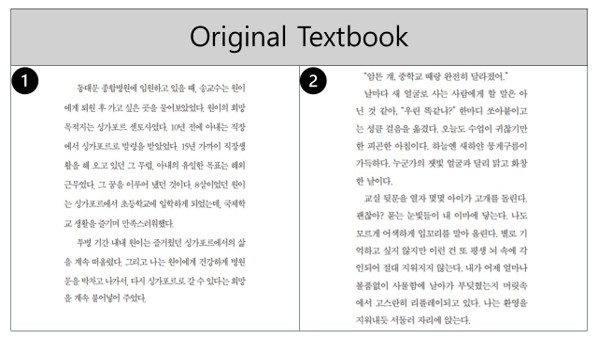
Figure 1. Two individual original texts entering the ConGen platform.
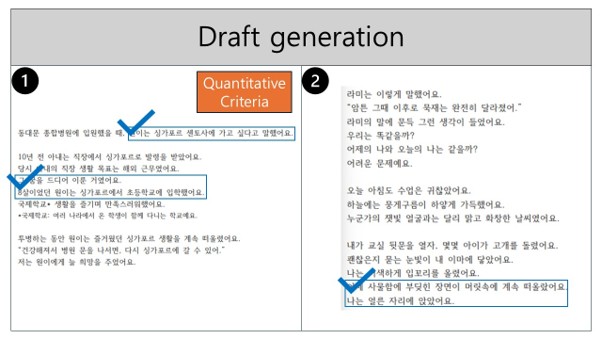
Figure 2. Drafts generated by ConGen satisfying preliminary quantitative criteria.
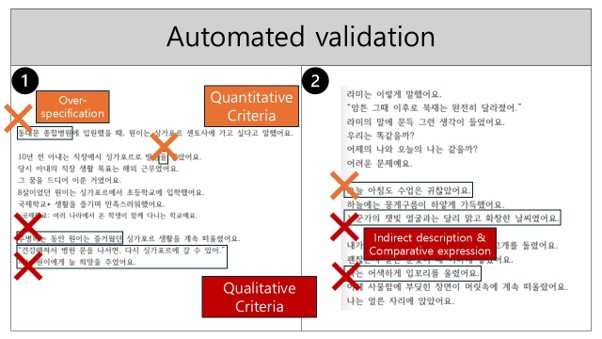
Figure 3. ConGen-generated drafts undergoing automated validation to identify quantitative and qualitative optimization areas.
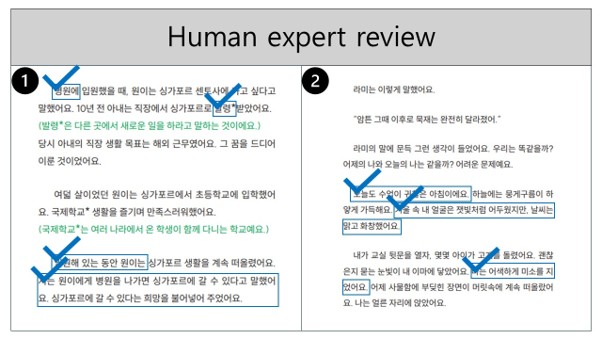
Figure 4. Final optimized contents validated through human expert review.
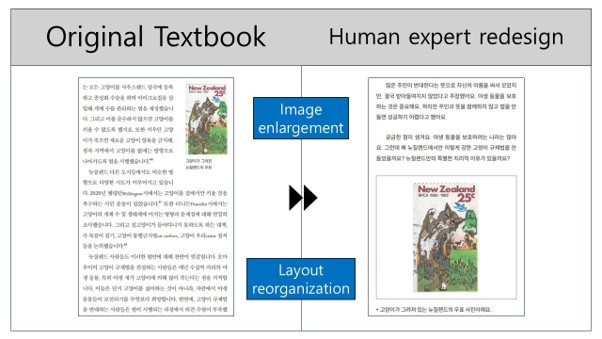
Figure 5. Visual adaptation of images and layout for the Easy-to-Read books.
Figures 1–5 illustrate the collaborative production workflow from the original text to the final Easy-to-Read books. As illustrated in Figure 1, the unedited source text represents the initial input before processing. Following the preparatory analysis in Stages 1–3, ConGen generates the preliminary draft shown in Figure 2. The ConGen draft satisfies the primary quantitative criteria while providing a foundation for further refinement. As highlighted in Figure 3, the automated validation stage evaluates the draft, identifying areas to further optimize quantitative criteria and highlighting qualitative aspects that require human expert review. This collaborative potential is realized in Figure 4, where professional human review refines the ConGen-generated draft by improving context and readability while preserving the efficiency of automated processing. Figure 5 illustrates the adaptation of the original images and layout, improving readability and clarity in the final Easy-to-Read book.
4. Future Works
The literacy spectrum among individuals with developmental disabilities is highly diverse. Research in special education indicates that reading materials should be tailored to individual learning profiles to improve engagement and comprehension. While the current ConGen system is based primarily on general accessibility principles, including the Federal Plain Language Guidelines [8], future development will expand its capacity to generate personalized Easy-to-Read content for readers with varying levels of developmental disabilities.
Future work will also include continuously updating domestic and international Easy-to-Read guidelines and integrating them into ConGen. These enhancements will enable ConGen to further strengthen collaboration with human experts, providing more inclusive and scalable access to Easy-to-Read books.
References
[1] ISO/IEC 23859 “Information technology — User interfaces — Requirements and recommendations on making written text easy to read and understand”
[2] ISO 21801-1 “Cognitive accessibility Part 1: General guidelines”
[4] Korean guidelines for developing easy-to-read books (PDF)
[5] 2023 Study on Basic Korean Language Content and Small-Scale Expansion
[6] A Study on the Development of Readability Assessment Criteria for Educational
[8] Federal Plain Language Guidelines 2011 (PDF)
Thanks to Hyun-Young Kim and the team at Boin IT, a DAISY Inclusive Publishing Partner, for sharing their expertise in this article.